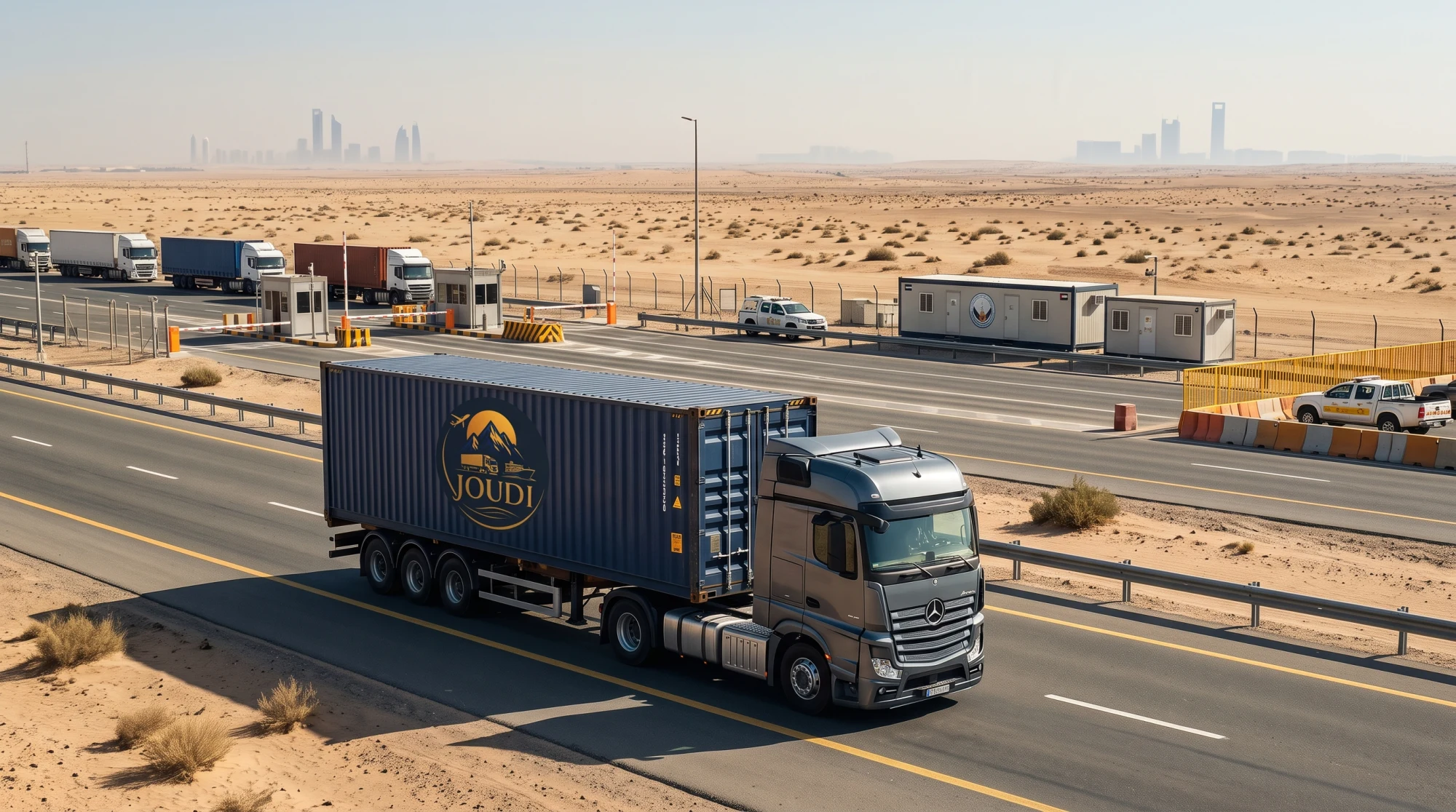
Shipping from Saudi Arabia to UAE by truck almost always runs through the Al Batha border post on the Saudi side and Ghuwaifat on the UAE side, in Abu Dhabi's Al Dhafra region. A full trailer or container load from Riyadh, Dammam or Jeddah to Dubai, Abu Dhabi or Sharjah usually takes a few days door to door. The exact time depends on the origin city, the paperwork and how busy the border is. The process is simple when the documents are right: a Saudi export declaration, a UAE import declaration, a commercial invoice and a packing list. You also need a certificate of origin if you want GCC duty exemption.
Why trucking is the default route from Saudi Arabia to the UAE
For UAE importers, distributors and factories buying from Saudi suppliers, road freight beats sea freight in most cases. There is no port handling and no waiting for a vessel. The truck loads at the supplier's warehouse and unloads at your door in Jebel Ali, Mussafah, Sharjah Industrial Area or wherever you need it.
Common options include:
- Full trailer (FTL): flatbed, curtain-side or closed box trailers for palletised goods, building materials and FMCG.
- Container on chassis: a 20ft or 40ft container moved by road, which suits sealed loads or cargo continuing onward by sea from a UAE port.
- Refrigerated trucks: for food, dairy and temperature-sensitive products.
- Low-bed trailers: for heavy machinery, generators and oversized equipment, which may need special permits.
- Groupage (LTL): shared truck space when you don't have a full load.
Al Batha–Ghuwaifat: what happens at the border
Al Batha and Ghuwaifat sit next to each other on the main highway linking the Eastern Province to Abu Dhabi. A typical crossing looks like this:
- Saudi exit at Al Batha: Saudi customs checks the export declaration, filed through the FASAH platform. The truck may be inspected or scanned before it is released.
- UAE entry at Ghuwaifat: UAE customs verifies the import declaration and the supporting documents. The truck may go through X-ray scanning or a physical inspection.
- Clearance or transit: Goods are either cleared at the border or moved under customs transit to Dubai, Sharjah or a free zone for clearance there.
The driver also needs to be in order. That means a valid passport, entry permission, driving licence, vehicle registration and insurance that covers the UAE. Queues can build up before public holidays and during peak trading periods. That is why a carrier with regular Saudi–UAE departures makes a real difference.
Documents step by step
From the Saudi supplier
- Commercial invoice: buyer and seller details, HS codes, quantities, values and Incoterms.
- Packing list: package count, gross and net weights, and dimensions.
- Certificate of origin: a GCC-origin certificate is needed to claim duty exemption under the GCC customs union.
- Saudi export declaration: usually filed by the supplier's broker or the trucking company.
For UAE customs
- Importer code: your UAE company must hold a customs code with the relevant emirate's customs authority.
- Import declaration: filed by a licensed broker on the emirate's platform, for example Abu Dhabi's ATLP or Dubai Trade.
- Truck waybill / CMR: the transport document showing the consignor, consignee and cargo.
Controlled and restricted goods
Food, cosmetics, medicines, chemicals, telecom equipment and some building products may need prior approval or registration with the relevant UAE authority. Sort this out before the truck leaves Saudi Arabia. Otherwise it can sit at Ghuwaifat for days.
Duties, VAT and costs in AED
Goods of genuine GCC origin with a valid certificate are generally exempt from customs duty. Non-GCC goods shipped from Saudi Arabia are treated differently. Duty may already have been settled at the first GCC point of entry, or it may apply on arrival, so confirm this with your broker in advance.
UAE import VAT applies at the standard rate. VAT-registered businesses can usually account for it through the reverse charge mechanism instead of paying upfront.
Freight costs in AED depend on:
- Pickup city and UAE delivery point
- Truck type (standard, reefer, low-bed)
- Weight, volume and whether it is FTL or groupage
- Customs clearance, inspections and any permits
- Waiting time at the border or at loading and unloading
Rates change with fuel prices and seasonal demand, so ask Joudi Cargo for a current quote rather than relying on old price lists.
Tips to avoid delays at the border
- Make sure invoice values, HS codes and weights match on every document.
- Send scanned copies to your forwarder before loading so errors are caught early.
- Agree Incoterms clearly, such as EXW, FCA or DAP, so everyone knows who clears what.
- Avoid dispatching right before long public holidays when possible.
- Label and seal the cargo properly so inspections run quickly.
Moving goods from a Saudi factory or supplier to your warehouse in Dubai, Abu Dhabi or Sharjah? Joudi Cargo handles collection, Saudi export, the Al Batha–Ghuwaifat crossing, UAE clearance and final delivery under one booking. Explore our land freight by truck and container to the GCC and contact our team for a tailored quote in AED.