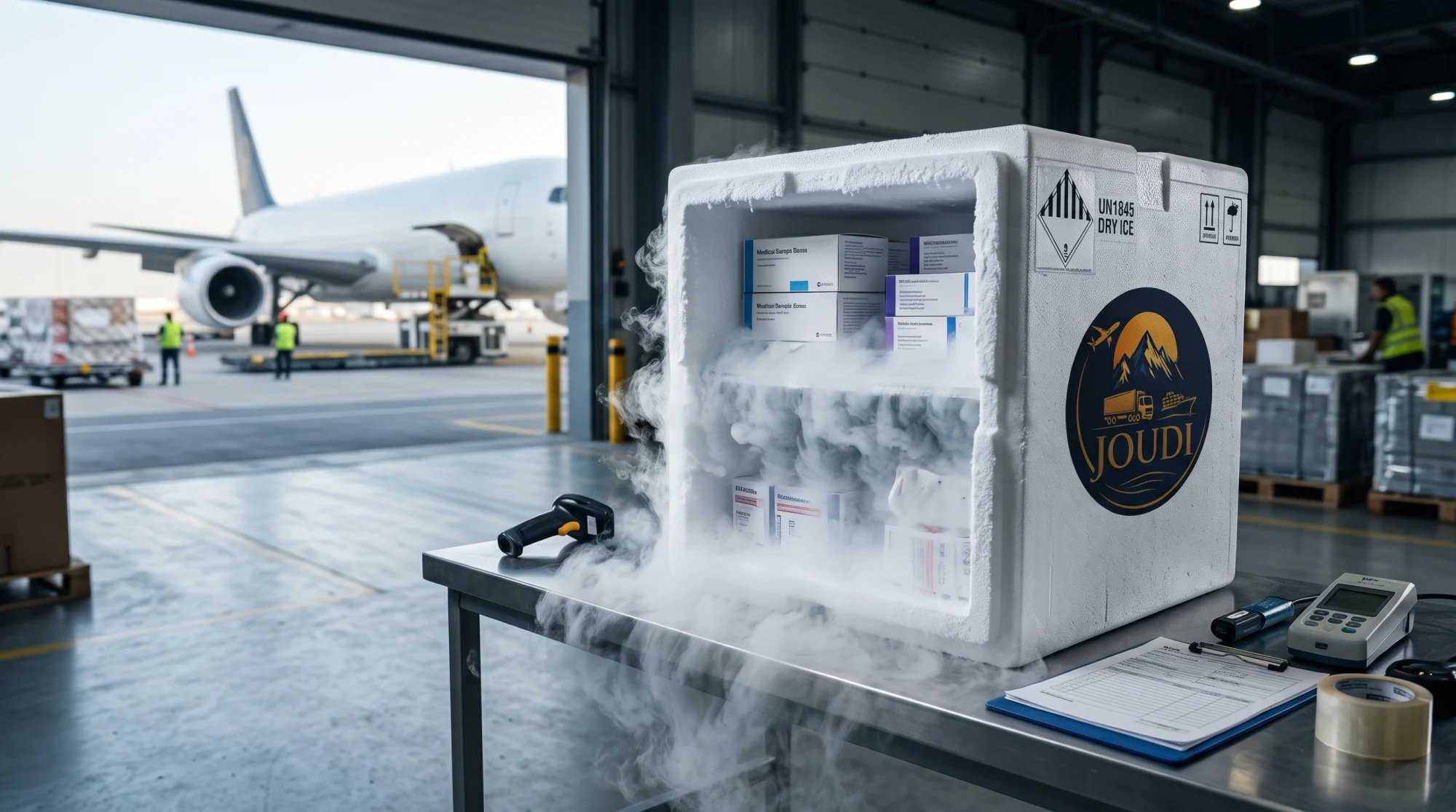
When shipping with dry ice from the UAE, biological samples, pharmaceuticals, and temperature-sensitive perishables must be handled under strict aviation safety regulations because solid carbon dioxide is classified as a hazardous material. Dry ice sublimates into carbon dioxide gas, which can displace oxygen in enclosed cargo holds or cause non-vented packages to rupture under extreme pressure. To move cold-chain cargo safely from Dubai, Abu Dhabi, or Sharjah to international destinations, shippers must use vented insulated packaging, proper hazardous labelling, and verify carrier acceptance against an updated Safety Data Sheet (SDS).
Why Dry Ice Is Regulated as Dangerous Goods in Air Freight
Dry ice sits at approximately -78.5 degrees Celsius and transforms directly from a solid into gas without turning into liquid. In the high-altitude, pressurized environments of commercial air transport, this sublimation introduces two primary hazards: asphyxiation and overpressurization.
As carbon dioxide expands, it displaces breathable air within aircraft holds. Airlines enforce strict limitations on the maximum weight of dry ice permitted aboard each aircraft type to protect flight crews and ground handlers. Furthermore, if dry ice is placed inside an airtight, hermetically sealed container, expanding gas builds pressure rapidly until the package explodes. Because of these distinct aviation hazards, dry ice cannot simply be checked as regular express cargo from UAE airports.
Essential Packaging Rules for UAE Cold-Chain Shipments
Maintaining temperature integrity in the UAE's warm climate requires careful packaging planning before your shipment leaves a Dubai warehouse or Abu Dhabi medical facility. Compliance relies on three foundational packing standards:
- Pressure-Relief Vented Outer Packaging: Containers must be engineered to let carbon dioxide gas escape freely while insulating the internal contents. Expanded polystyrene (EPS) insulated boxes placed inside strong corrugated outer cartons are industry standard. Never tape the seams of styrofoam liners airtight.
- Primary Leak-Proof Containment: If you are moving liquid medicines, blood vials, or biological reagents, the primary containers must be leak-proof and paired with absorbent material capable of soaking up the entire liquid volume in case of breakage.
- Durable Support Material: Dry ice shrinks as it sublimates. Shippers must place internal packaging supports, cushioning, or dunnage around primary vials so they do not shift, collide, or crack as the dry ice volume decreases during transit.
Labelling, Marking, and Documentation Requirements
Airlines operating out of Dubai International (DXB) or Sharjah International (SHJ) conduct meticulous ground checks on cold-chain parcels before acceptance. Every parcel requiring dry ice must display clear external indicators on one continuous side:
- A dedicated Class 9 Miscellaneous Dangerous Goods diamond label.
- The proper shipping designation clearly marked as "Dry Ice" or "Carbon Dioxide, Solid".
- The exact net weight of dry ice contained in the package, expressed strictly in kilograms.
- The names and full physical addresses of both the sender in the UAE and the recipient abroad.
- Accurate air waybill annotations showing the net quantity of dry ice per package.
Under international air transport guidelines, packages containing dry ice used exclusively as a refrigerant for non-hazardous materials (like foodstuffs or standard diagnostic specimens) generally do not require a formal Shipper's Declaration for Dangerous Goods. However, the air waybill must explicitly state the proper shipping name, class, UN number, and net weight. If the items chilled inside are also dangerous goods—such as infectious substances or volatile chemicals—both hazards must be documented concurrently.
Calculating Ice Quantities for Middle East Transit
Ambient ground temperatures across Dubai, Riyadh, Cairo, and regional transit hubs often exceed 40 degrees Celsius during peak months. Standard sublimation rates run between 1 to 2 kilograms per 24-hour cycle inside high-grade insulated packaging, but extreme local tarmac heat accelerates this process.
Shippers should calculate required dry ice quantities based on total estimated door-to-door transit time rather than flight duration alone. Factoring in potential customs clearance delays at foreign entry ports prevents critical sample degradation. Sourcing food-grade or medical-grade dry ice pellets from certified suppliers across Dubai or Sharjah just prior to carrier dispatch helps maximize your cooling window.
Reliable Cold-Chain and Dangerous Goods Shipping from the UAE
Navigating cold-chain logistics requires experienced freight coordination to prevent rejected cargo, airport holds, or spoiled pharmaceutical consignments. Joudi Cargo simplifies international transport by managing compliant packaging, verified carrier documentation, and express dangerous goods shipping through the FedEx Inaccessible Dangerous Goods service. Whether you are dispatching vital lab diagnostics to Europe, medical supplies to Egypt, or specialty goods across the GCC, reach out to our logistics specialists to get an instant dangerous-goods shipping quote; please ensure your Safety Data Sheet (SDS/MSDS) is ready at the time of booking so our team can verify carrier acceptance and technical compliance immediately.